AI in Everyday Life: How Automation is Changing the Future
By yahamilegaai | Updated: November 2025
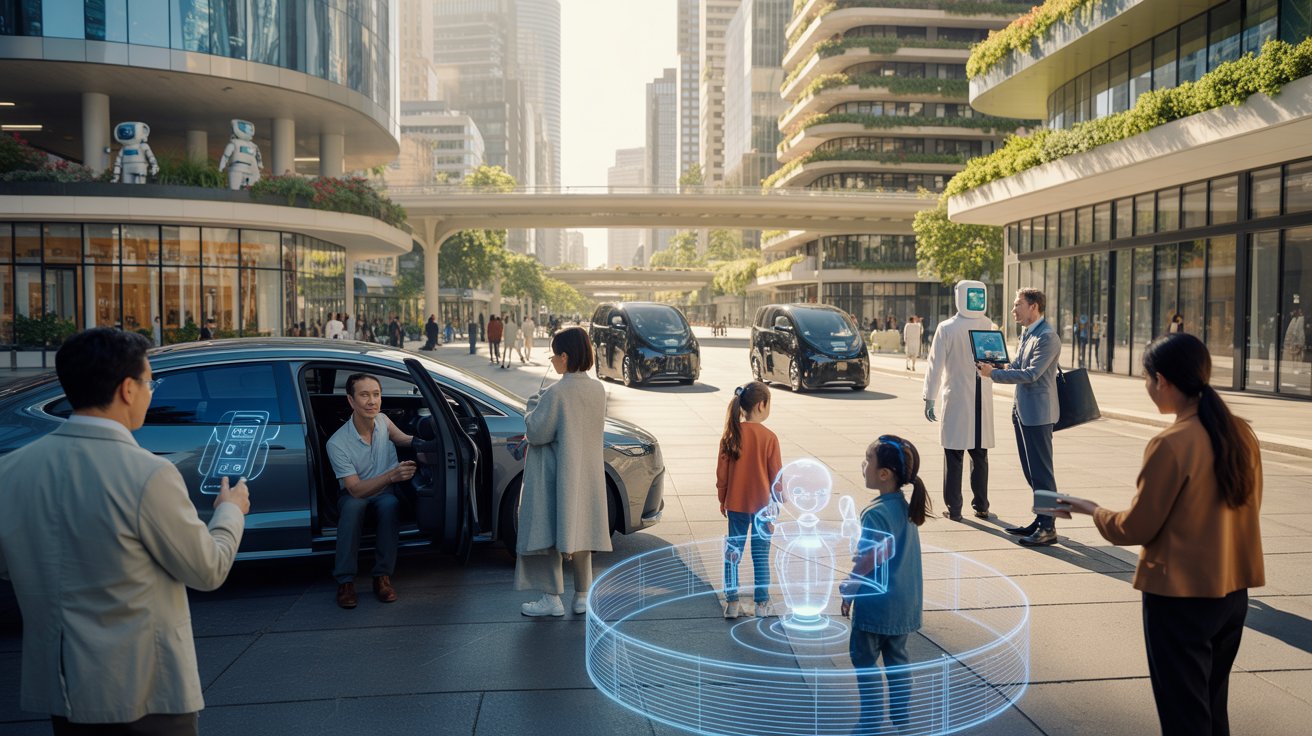
In today’s digital age, artificial intelligence (AI) and automation are no longer science fiction — they’re part of our daily reality. From waking up to winding down, AI quietly influences how we live, work, travel, and shop.
This article explores how AI in everyday life is reshaping habits, workplaces, and our future — including its benefits, challenges, and the trends you should know to stay ahead.
What is AI and Automation — and Why Do They Matter?
Artificial Intelligence refers to systems capable of performing tasks that typically require human intelligence — such as speech recognition, learning, or decision-making. Automation uses technology to execute tasks with minimal human input. Together, they create smart systems that adapt and evolve over time.
Understanding how AI is changing the future is crucial. Pew Research found that over half of adults interact with AI daily — often without realizing it. This invisible integration is transforming our world faster than ever.
How AI in Everyday Life Works — Behind the Scenes
- Data + Algorithms = Insights — AI learns from your behavior, purchases, and preferences.
- Feedback Loops — The more you interact, the smarter it becomes.
- Automation of Decisions — Systems don’t just inform, they recommend or act.
- Integration — Embedded in phones, appliances, cars, and services.
- Continuous Learning — Constant updates mean continuous improvement.
Key Areas Where Automation is Changing the Future
1. Smart Homes & Personal Devices
Voice assistants, smart appliances, and home security systems now automate lighting, temperature, and routines — bringing convenience and personalization into our homes.
2. Transportation & Navigation
AI powers navigation apps, ride-hailing services, and even autonomous vehicles — optimizing routes, fuel use, and safety. Cities are adopting smart traffic systems to reduce congestion and pollution.
3. Shopping & E-Commerce
From personalized recommendations to chatbots and AI-driven logistics, automation is revolutionizing how we shop, discover, and receive products.
4. Healthcare & Wellbeing
AI diagnostics detect diseases faster. Smart wearables track health metrics. Hospitals use automation to streamline administration — improving outcomes and reducing costs.
5. Work & Productivity
Automation in the workplace reduces repetitive tasks. AI tools assist in writing, analytics, and decision-making — enabling humans to focus on creativity and strategy.
6. Education & Learning
AI personalizes education by adapting lessons to students’ progress, while automating grading and feedback. Learning is becoming lifelong and self-paced.
Benefits and Opportunities
- Improved efficiency and convenience
- Personalized experiences and learning
- New business and innovation opportunities
- Competitive advantage for early adopters
Challenges and Risks
- Job displacement and need for reskilling
- Data bias and privacy concerns
- Ethical and legal accountability
- Environmental impact of large-scale AI
Real-Life Scenarios of AI in Action
Morning Routine: Smart alarms, lights, and coffee machines synchronize with your sleep cycle and preferences.
Commuting & Work: Navigation apps reroute you intelligently; AI email assistants filter and summarize messages.
Shopping: AI recommends products and tracks deliveries efficiently.
Health & Learning: Wearables detect issues early, while AI tutors adapt lessons to your needs.
For Entrepreneurs & Individuals: How to Leverage AI
- Adopt AI-powered productivity tools
- Automate repetitive workflows
- Personalize customer and user experiences
- Focus on creativity and ethics
- Stay adaptable and keep learning
The Future Outlook
The next decade will see ambient intelligence, edge AI, and human-AI collaboration become the norm. Automation will extend beyond tech — into agriculture, education, and public health — shaping sustainable, ethical systems.
Final Thoughts
AI and automation are not futuristic concepts — they’re present realities shaping our world. The question isn’t whether AI will affect your life, but how consciously you choose to engage with it.
Use automation as an ally — not a crutch. Learn, adapt, and stay mindful of its impact. The future is being built by automation, and you can either shape it — or be shaped by it.